
A property advertised at €200,000 rarely requires a budget of exactly €200,000. The final amount depends on the transaction, the buyer and what the agreed price includes.
Know when the costs arise
The payment schedule makes more sense when the legal steps are clear. After the property has been chosen and checked, the parties sign a sale contract. The contract is then registered with the Land Registry, known as Tapu ve Kadastro Dairesi. Title transfer follows when the conditions for transfer have been met.
Contract signing
The agreement records the property, price, payment terms and each party’s obligations. Stamp duty relates to the contract.
Contract registration
The signed contract is registered with Tapu against the specific property. In the first-purchase example below, this step is due within 21 days of signing, with the registration payment at this stage.
Title transfer
The ownership record is transferred to the buyer when the applicable conditions are met. Charges at this stage should be identified separately from contract costs.
Signing, registering and transferring title are distinct events. A single percentage labelled “purchase tax” can hide both the type of charge and when it must be paid.
Separate the government charges
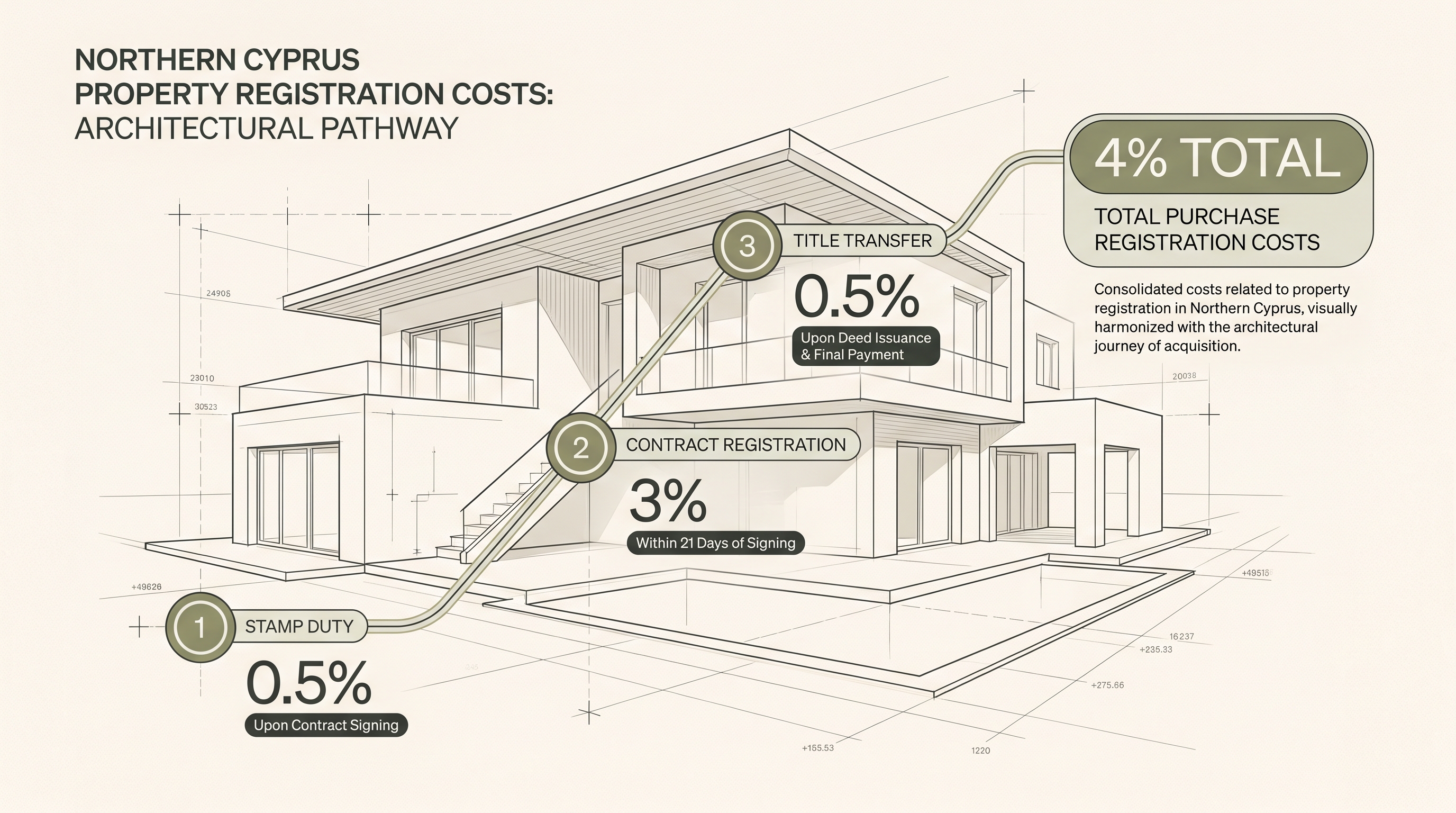
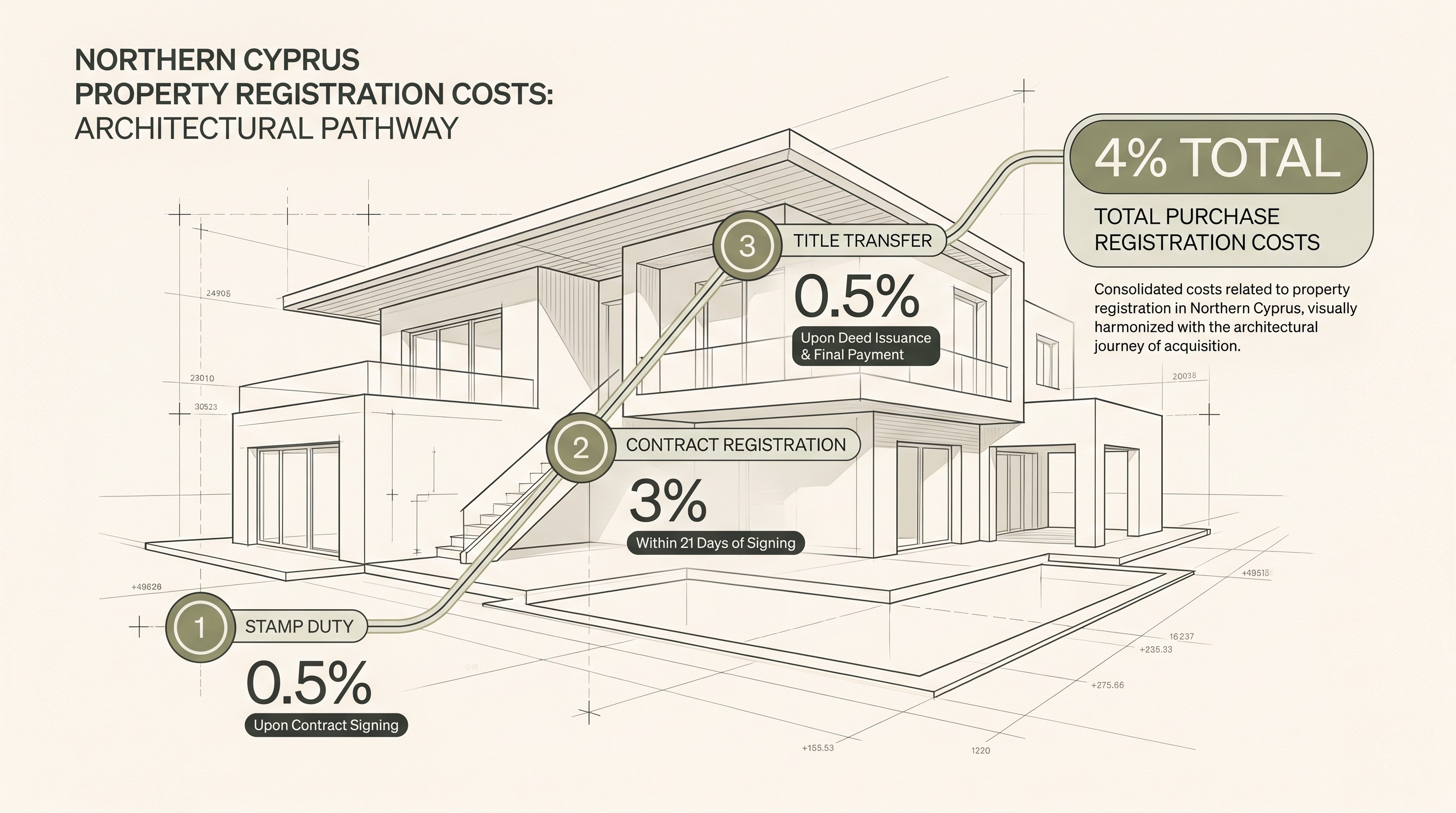
Ask for stamp duty, the contract registration fee and the title-transfer fee as separate items. The €200,000 first-purchase example for a foreign buyer below shows when each is due.
| Stage | Charge | Rate | Example amount |
|---|---|---|---|
| Contract signing | Stamp duty | 0.5% | €1,000 |
| Contract registration at Tapu | Registration fee | 3% | €6,000 |
| Title transfer | Title-transfer fee | 0.5% | €1,000 |
| Total across the stages | Government purchase payments | 4% | €8,000 |
View enlarged image details
Swipe or scroll sideways to inspect the full image.
The Land Registry links the registered contract to the property. Ask for a schedule showing what is payable at each stage.
Check VAT and new-build extras
VAT (KDV) is another possible cost, but it does not apply to every property transaction. Whether it applies depends on the property and the seller. In the new-build example here, 5% VAT adds €10,000 to a €200,000 purchase. In a resale transaction, its treatment may differ. Confirm the position for the specific contract and ask whether the advertised price includes VAT.
A new development may also have charges for electricity or water connections, meters or transformer infrastructure. These can appear under names such as “connection fee”, “infrastructure fee” or “transformer fee”. They are project charges, not a uniform government tax.
In the illustrative €200,000 new-build example, €1,200–€2,350 is set aside for infrastructure and connections. This is a planning allowance, not a published tariff or a quote for every development. Find out which connections are complete, which costs are included in the price and which the developer will invoice separately.
Budget for independent legal work
Legal fees sit outside the government charges. A lawyer’s work may include checks on the title, the property, the seller and any encumbrances, as well as a review of the contract before the main payment is made. Our guide to buying property in Northern Cyprus explains why those checks matter.
The fee depends on the lawyer and the scope of the transaction. Request a written quotation and confirm what is included; do not assume legal work is covered by a percentage quoted for state charges.
Compare new build and resale on the same basis
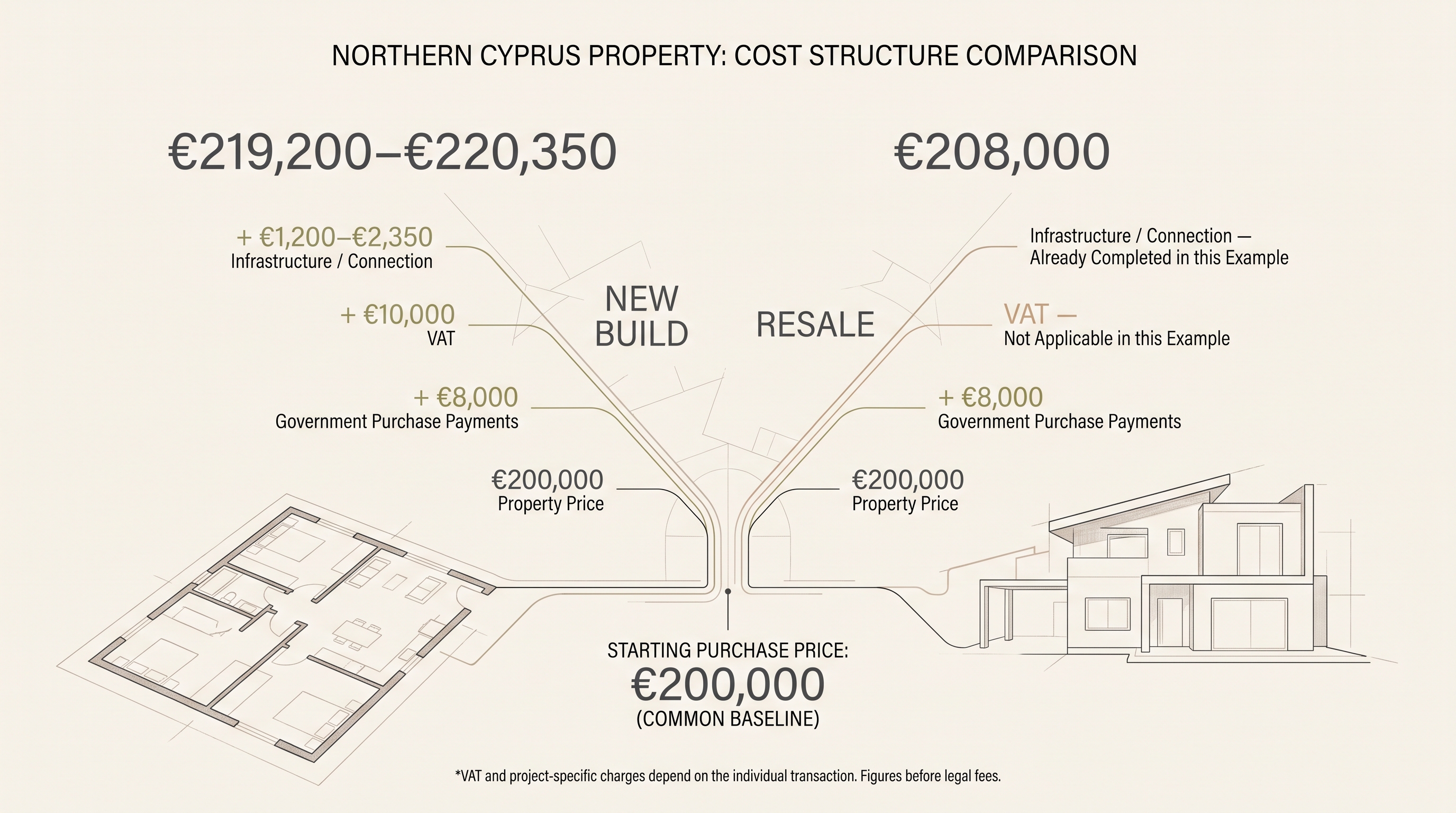
Two apartments advertised at €200,000 can require different purchase budgets. The resale apartment may already have utilities connected, while VAT still needs to be checked for that specific transaction.
| Cost | New build | Resale | In this example |
|---|---|---|---|
| Property price | €200,000 | €200,000 | The same advertised price. |
| Government payments | €8,000 | €8,000 | The first-purchase example above. |
| VAT (KDV) | €10,000 | Not due | 5% on the new build; none on this resale. |
| Infrastructure and connections | €1,200–€2,350 | Already connected | A separate developer charge in the new-build example. |
| Total before legal fees | €219,200–€220,350 | €208,000 | The lawyer’s quoted fee is added separately. |
View enlarged image details
Swipe or scroll sideways to inspect the full image.
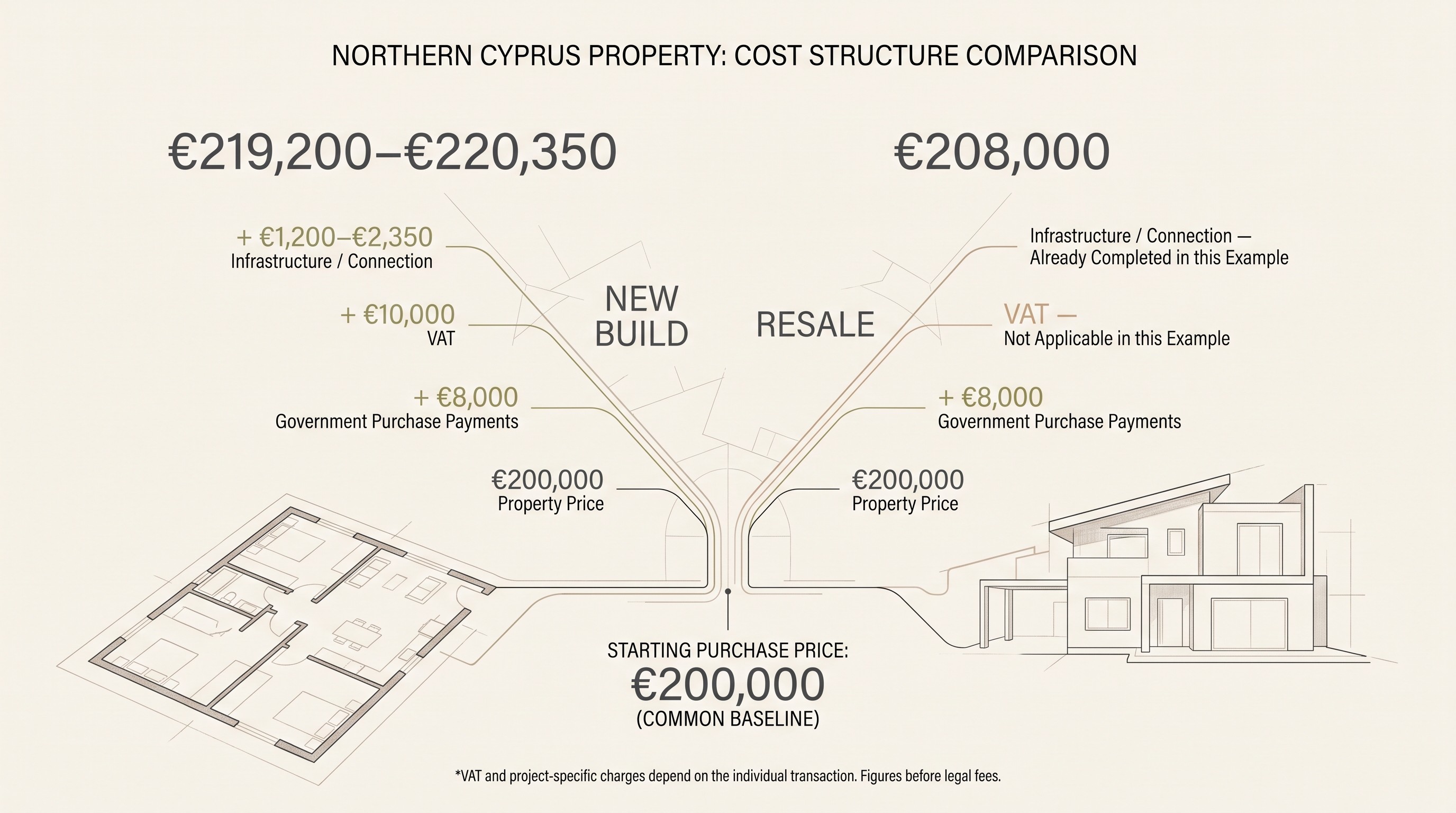
These totals apply to the two illustrated transactions. VAT and project charges depend on the specific property; obtain a calculation for each home before comparing final costs.
Keep ownership costs in a separate calculation
Once the purchase is complete, a different set of expenses begins: complex maintenance, electricity, water, internet and insurance. A private pool or garden adds its own upkeep; an owner living abroad may also need property management.
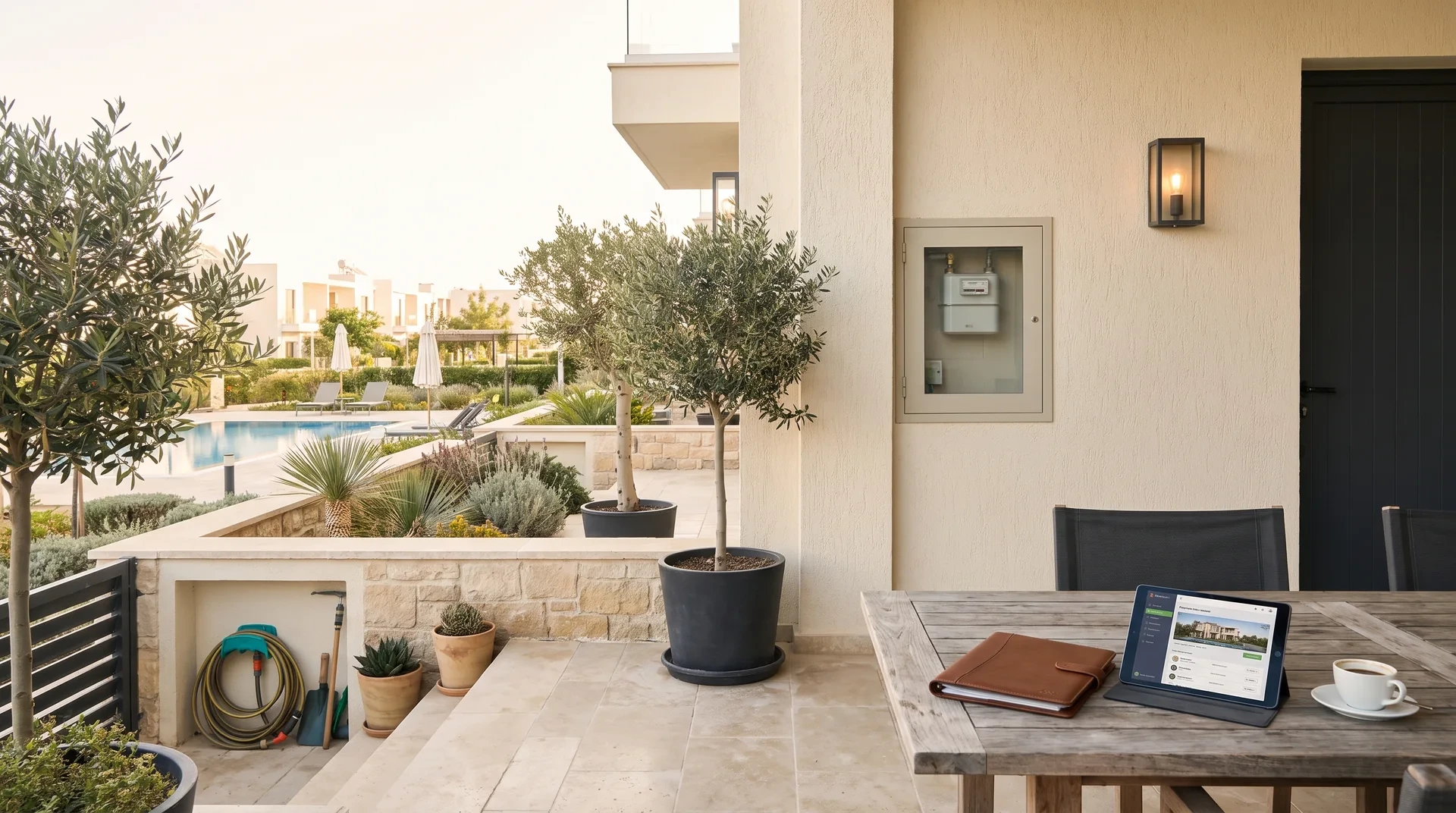
For an apartment in a managed development, ask how the maintenance fee is set and what it covers. Keep these recurring costs distinct from the one-off amount needed to buy the home.
Compare the full budget, not just the listing price
A useful property comparison begins with the final amount payable for each specific transaction. Put the asking price, government charges, possible VAT, legal fees and project extras on one sheet, then look at ownership costs separately. Confirm the figures and payment dates before committing.
You can compare current Terrasa properties with that framework in mind. For help clarifying the costs attached to a particular home, contact Terrasa.