

The sale is complete. Next comes handover: inspect the property, arrange essential services and decide how the home will be cared for.
For an owner who lives outside Northern Cyprus, it helps to decide before handover who will check the property, handle routine issues and prepare it for each visit. If the home is intended for rent, there is an additional operating plan to make.
Inspect the property before accepting it
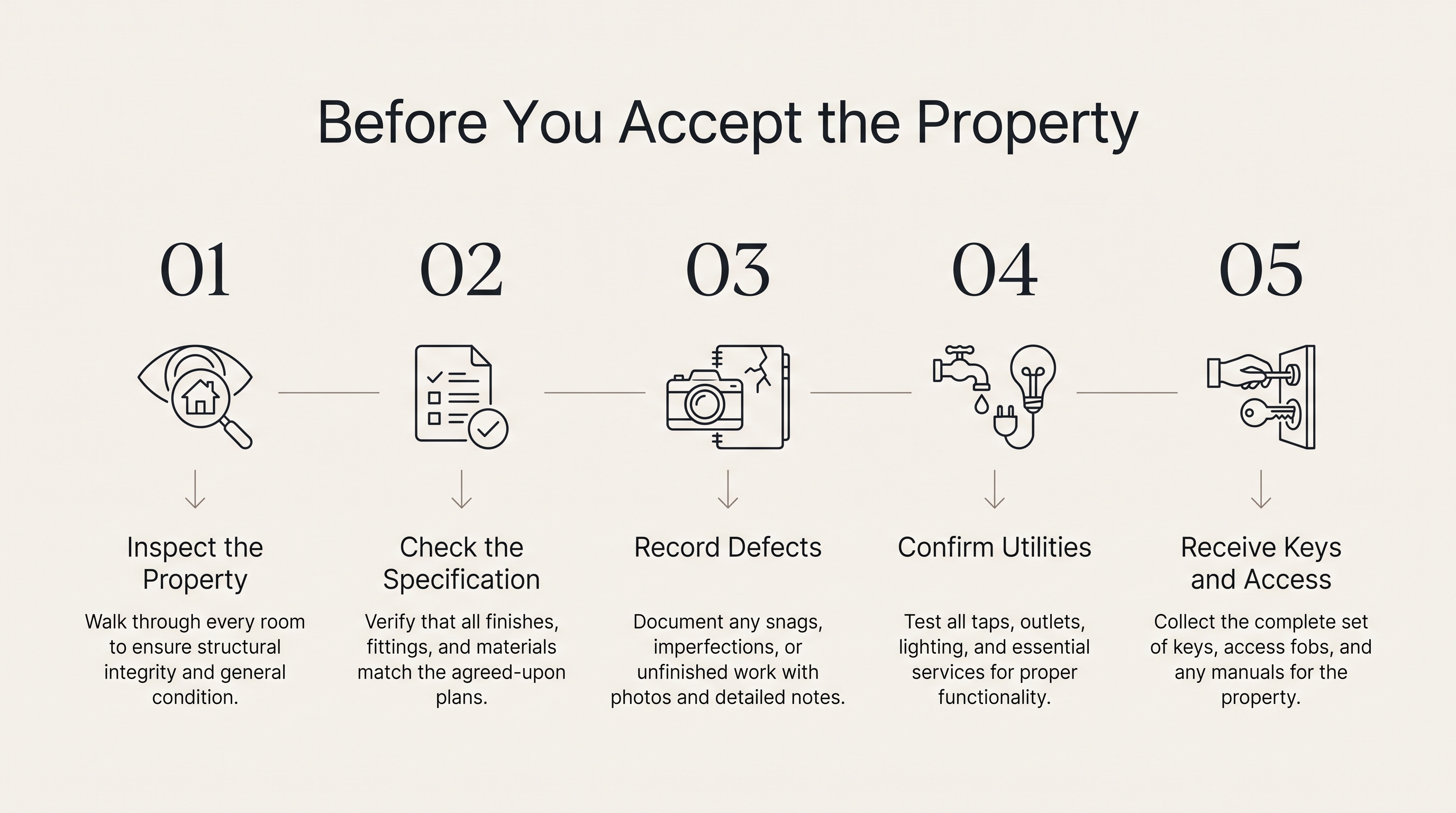
For a new home, take time to walk through every room and compare what has been delivered with the contract and agreed specification. Check finishes, windows, doors, plumbing, electrics, lighting, air conditioning, built-in furniture and appliances where they were included.
Test the details that are easy to miss: window seals, taps, drains, sockets, door mechanisms and cooling. Record defects immediately and give the developer a written list. Also confirm that the furniture, equipment and finishes match what was agreed; receiving the keys does not replace that comparison.
Check the basic connections at handover. The owner arranges the electricity meter and connection through KIB-TEK (see its electricity subscription guidance, available in Turkish), while the developer should have installed the water meter before the property is handed over. Confirm both points for the particular home.
View enlarged image details
Swipe or scroll sideways to inspect the full image.
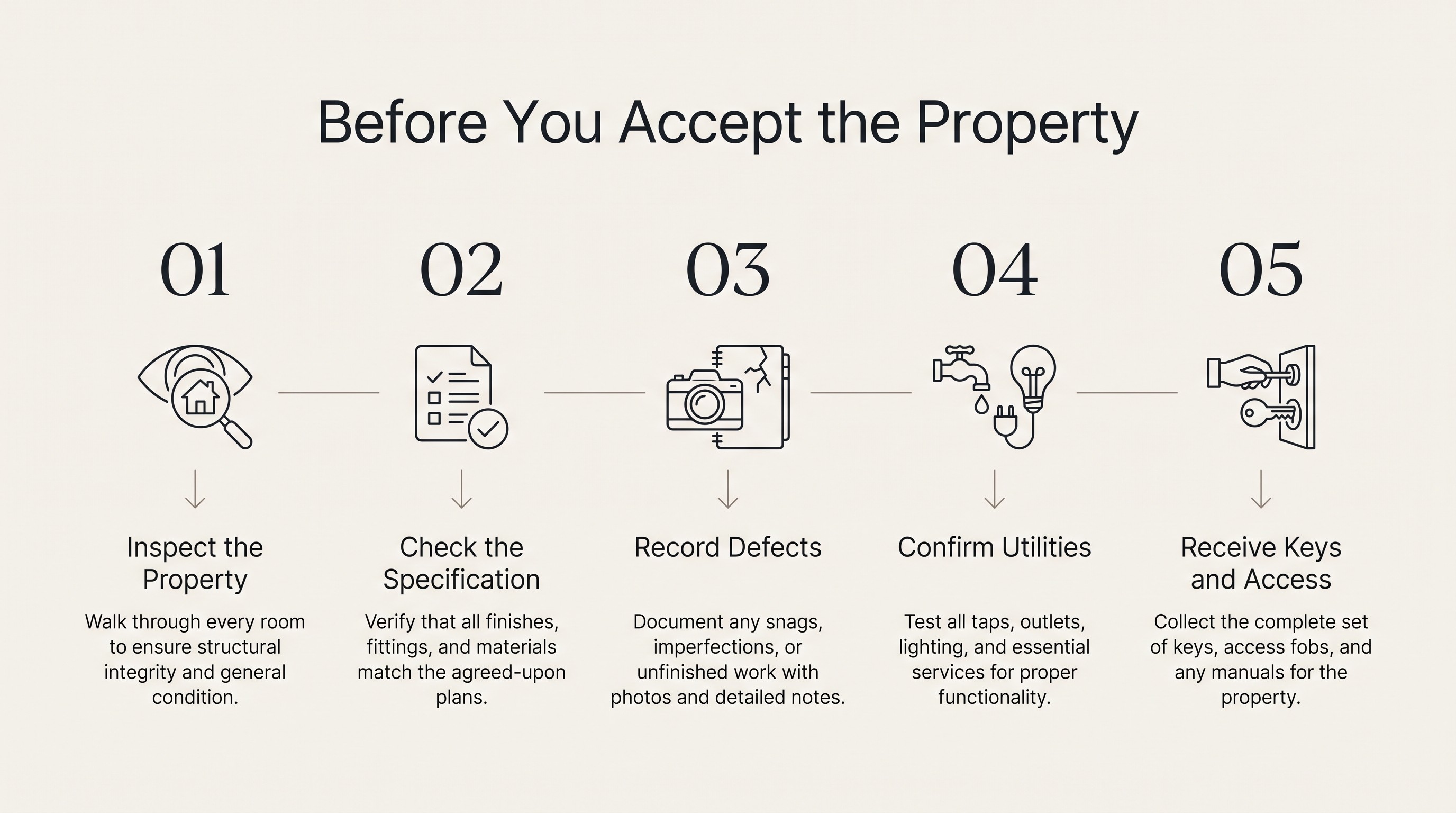
The handover graphic also calls for checking structural integrity and general condition, recording snags or unfinished work with photos and detailed notes, and collecting the complete set of keys, access fobs and any property manuals.
Set up the home for everyday use
After the inspection, confirm that electricity and water are working, internet can be connected and the relevant accounts are in order. In a residential complex, get the management company’s contact details and find out where to report technical problems and how the shared facilities are maintained.
Ask what the maintenance fee covers and how it is paid. It may fund common areas, pools, landscaping, lighting, security and cleaning, but the amount depends on the development. These are ownership costs, separate from the purchase budget described in our guide to buying costs and ongoing expenses.
For someone living in the property, the fee becomes part of the regular household budget. For an owner planning to rent it out, it also affects the result after expenses.
Decide who will care for the property while you are away
An unoccupied home still needs attention. Bills have to be monitored, the condition of the property checked, repairs arranged and issues with the complex management company handled. An owner who visits frequently may do this personally; others appoint a local representative or property manager.
- Property checksAgree how often the home will be inspected, especially after a long absence.
- Bills and maintenanceSet out who monitors accounts, arranges small repairs and liaises with the complex management company.
- Owner visitsClarify who prepares the home and deals with practical issues before arrival.
- Scope and reportingGet the exact duties, fee and reporting arrangement in writing before appointing anyone.
“Property management” can mean different things from one provider to another. The agreement should name the work that will actually be done, rather than rely on the label alone.
Examine any developer or complex rental programme
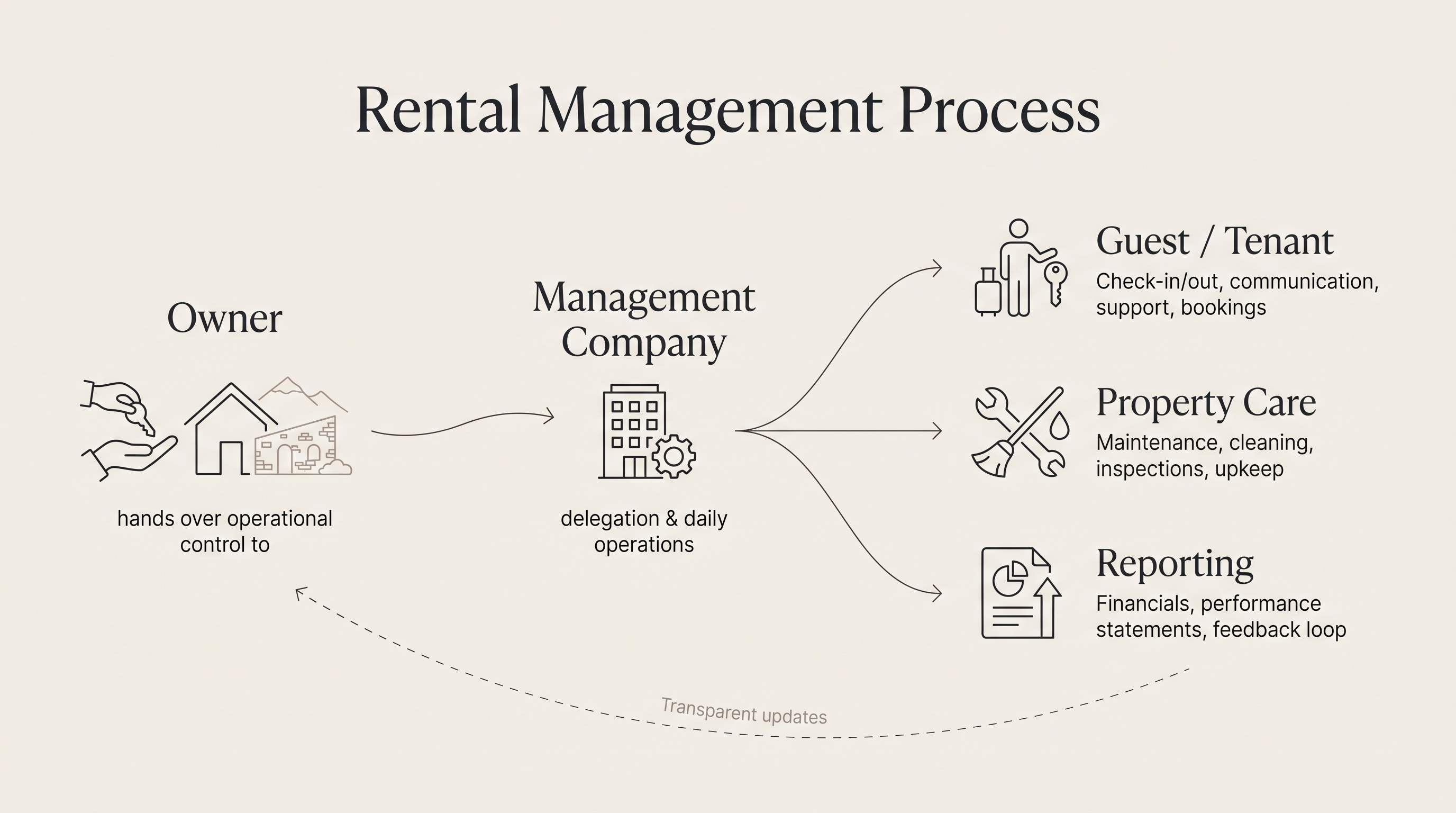
In some developments, the developer or a linked management company also offers rental management. A team based at the complex may handle listings, tenant enquiries, check-in, cleaning, inspections and everyday care. In other projects, the owner still has to agree particular services or take part in pricing and promotion.
Before handing over the operation, ask about the management commission, how rental income is calculated, when the owner is paid, which expenses are separate and what reports will be provided. The existence of a rental programme is a service arrangement, not a guarantee of income.
View enlarged image details
Swipe or scroll sideways to inspect the full image.
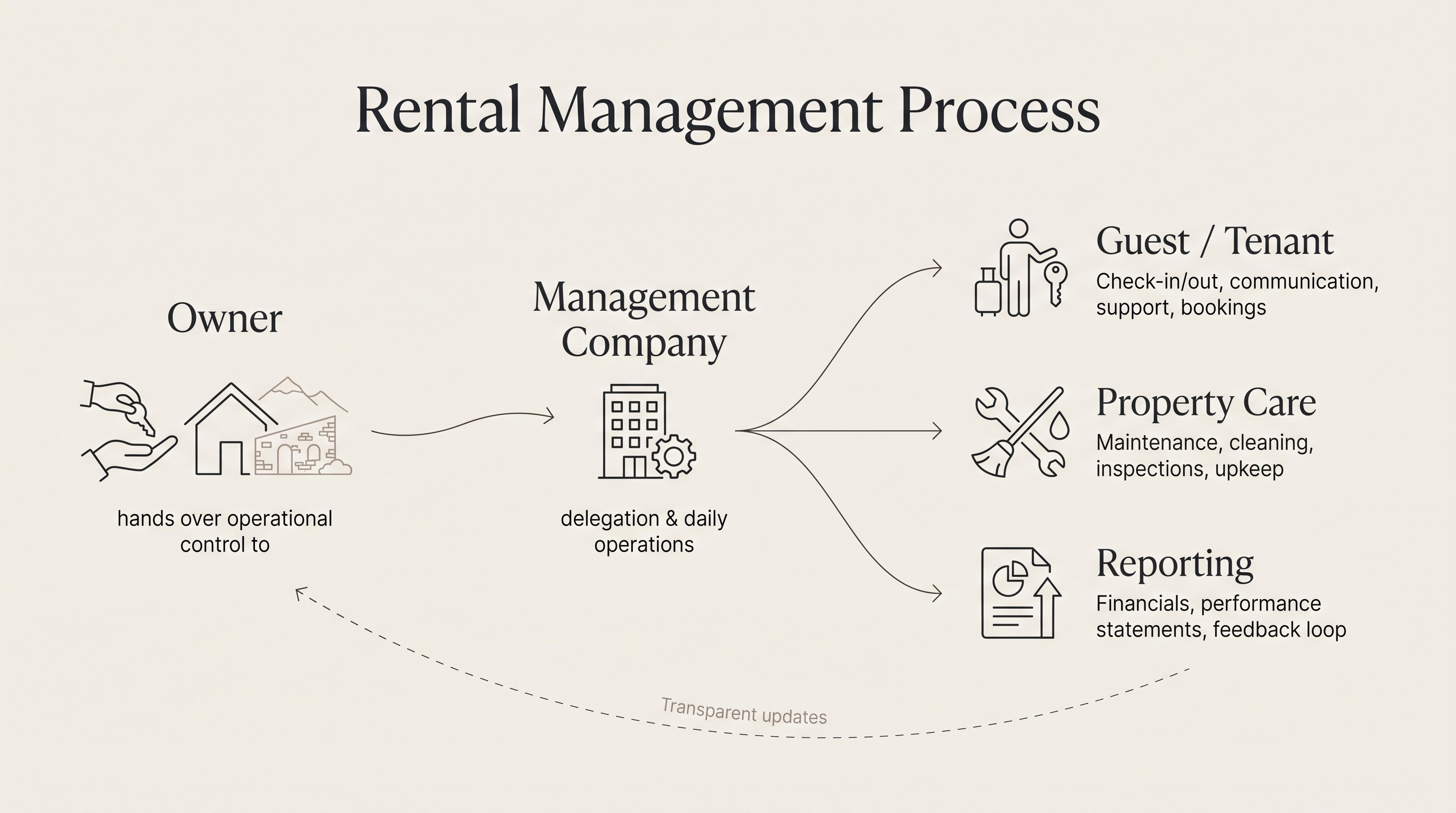
In the illustration, the owner delegates daily operations to a management company. Its work branches into guest or tenant bookings, check-in and check-out, communication and support; maintenance, cleaning, inspections and upkeep; and financial and performance statements, with updates and feedback returning to the owner.
Choose a rental model that suits the property
Short stays and long-term tenancies require different levels of management. Short-term rental involves advertising, bookings, arrival and departure, cleaning, linen changes, guest communication and a check after each stay. It can bring higher revenue in a suitable location, but requires much more day-to-day operation.
Long-term rental is usually less intensive to manage: find a tenant, agree the terms, monitor payments and keep an eye on the property throughout the tenancy. Neither model should be chosen from a projected return alone. As our buying guide explains, the location, amenities, home and quality of management all matter. A tourist complex by the sea and a city apartment in Kyrenia may suit different approaches.
Even a new apartment may need furniture, kitchenware, textiles, appliances or internet before a tenant can move in. Include that preparation in the plan rather than assuming handover means rental readiness.
Keep the running costs in view
The one-off payments attached to the purchase give way to regular expenses: the complex maintenance fee, electricity, water, internet and insurance where needed. A private pool or garden adds upkeep; an owner living abroad may also pay for local management.
Rental use adds cleaning, small repairs, replacement appliances and consumables, and occasional renewal of furniture or textiles. When assessing rental performance, look at what remains after these expenses, not the advertised rent alone.
Leave room for your plans to change
A holiday home may later become a rental property; an investment may become a place to spend several months a year. If the owner eventually decides to sell, the documents, condition of the home, unpaid charges and marketability matter again.
Review the arrangement as the way you use the property changes. For personal use, the focus is on its condition, bills and readiness for the next visit. For rental use, revisit the rate, management expenses and the service you receive.
The keys begin the next phase
Ownership works best when the handover, connections, routine care and any rental duties have clear owners. Plan those practical steps before you need them, especially if you will spend much of the year elsewhere.
If you are still comparing homes, explore Terrasa properties with the full ownership plan in mind. For a conversation about a specific property and how it might be used, contact Terrasa.